



Director’s treatment

The Treatment

Three people, three worlds, across three acts: the Utopia of More, the Overload, and Business Better.

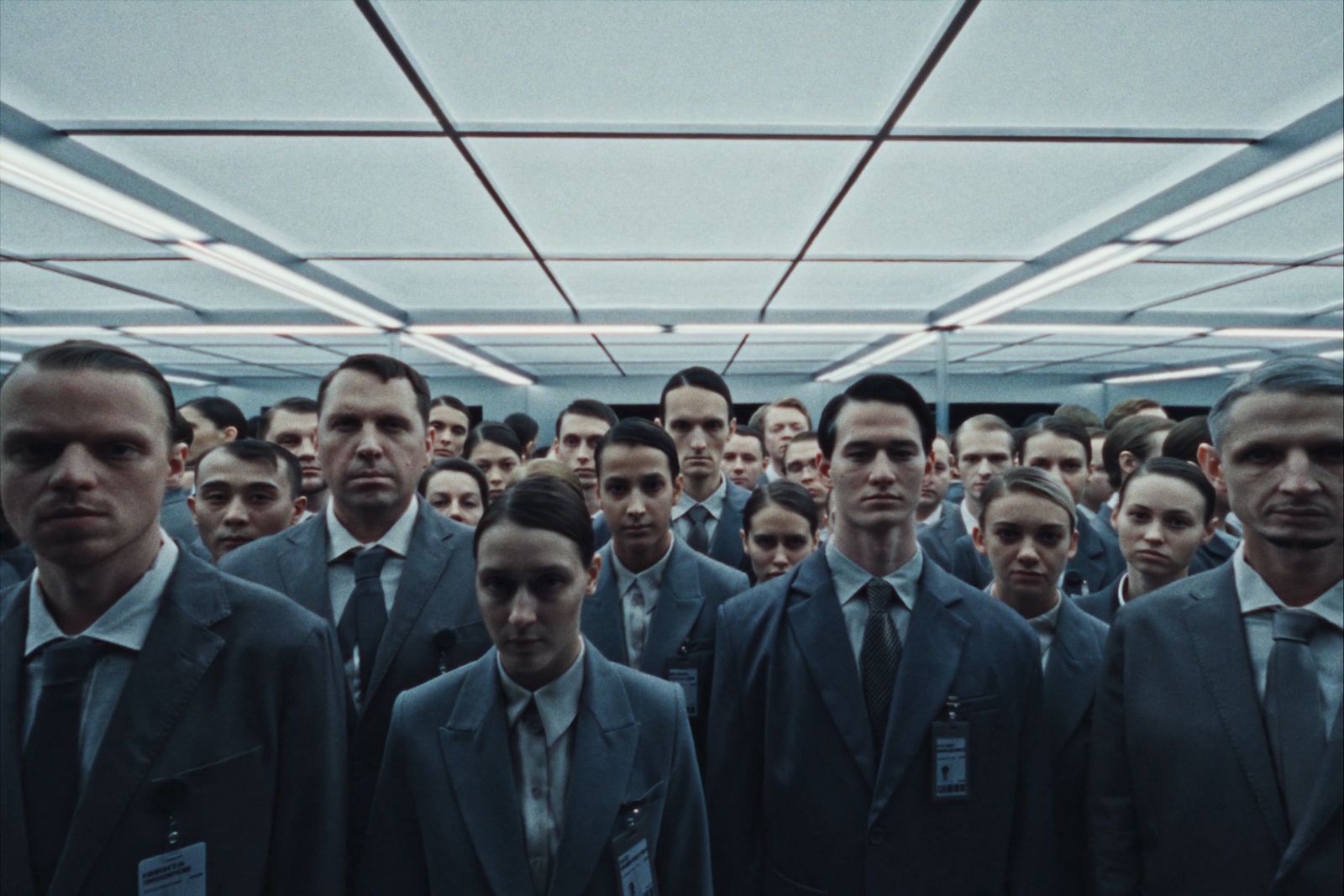
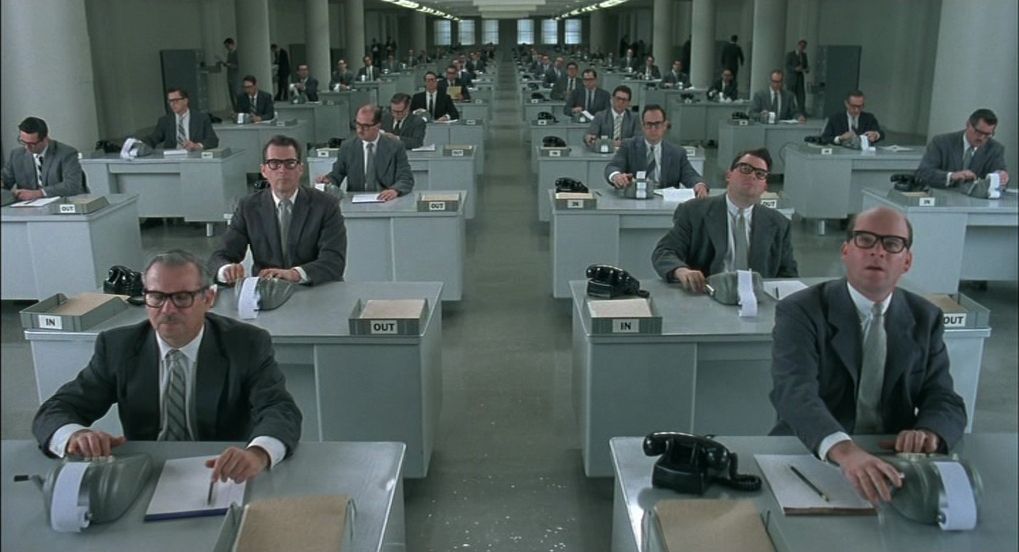
Rows of identical grey-suited workers facing forward in a vast hall
Act IUtopia of More
Act IIThe Overload
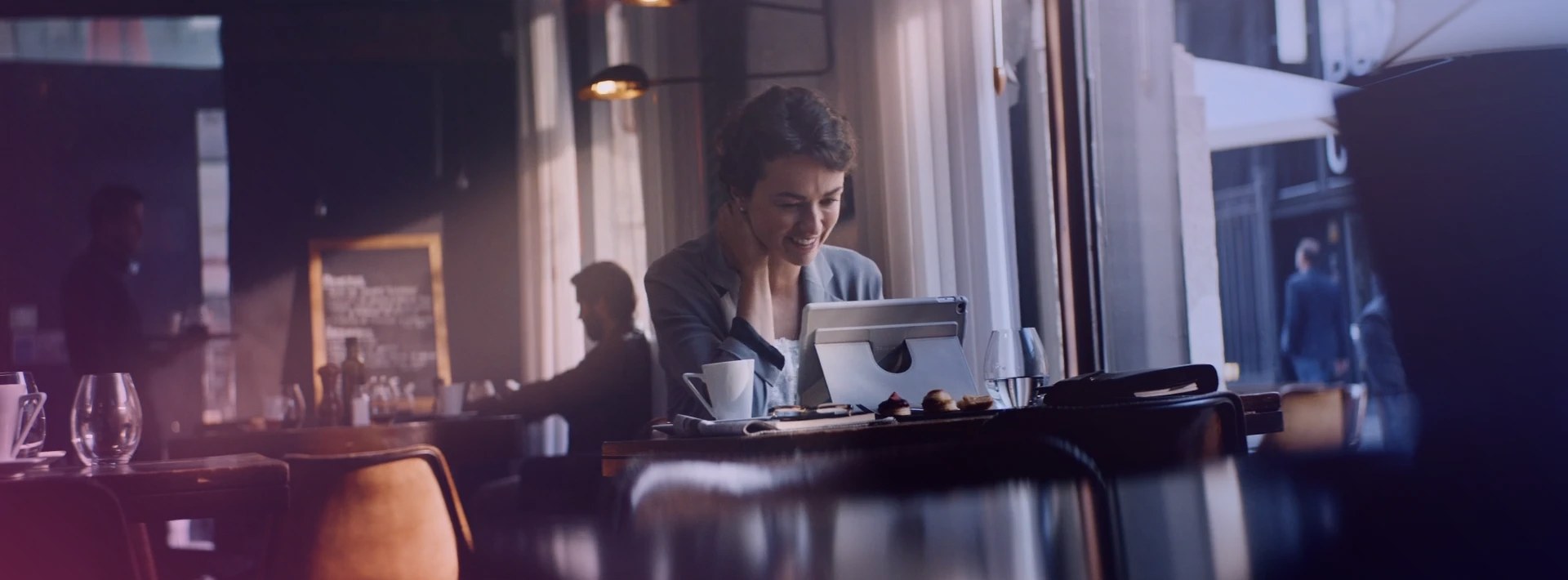
A woman smiling at a tablet in a sunlit café, a man working behind her
Act IIIBusiness Better

01

The People

Three people, three worlds. We anchor the film on three central characters and follow them through all three acts: the Utopia of More, the Overload, and Business Better. Their emotional arc tells the audience how to feel at each turn.

Everything around them changes: the places, the light, the palette and the behavior of everyone else. They don’t. Because they are constant, their reactions carry the story: what they notice, when they can’t keep up, and when they finally exhale. They are the audience’s lens.

This is “show, don’t tell” applied to the platform. We never claim KPMG makes business better. We let people the audience recognizes feel the difference.

A woman in a cream top smiling warmly, seated in a softly lit lounge
A blonde woman looking out of an aeroplane window, lit by cool daylight
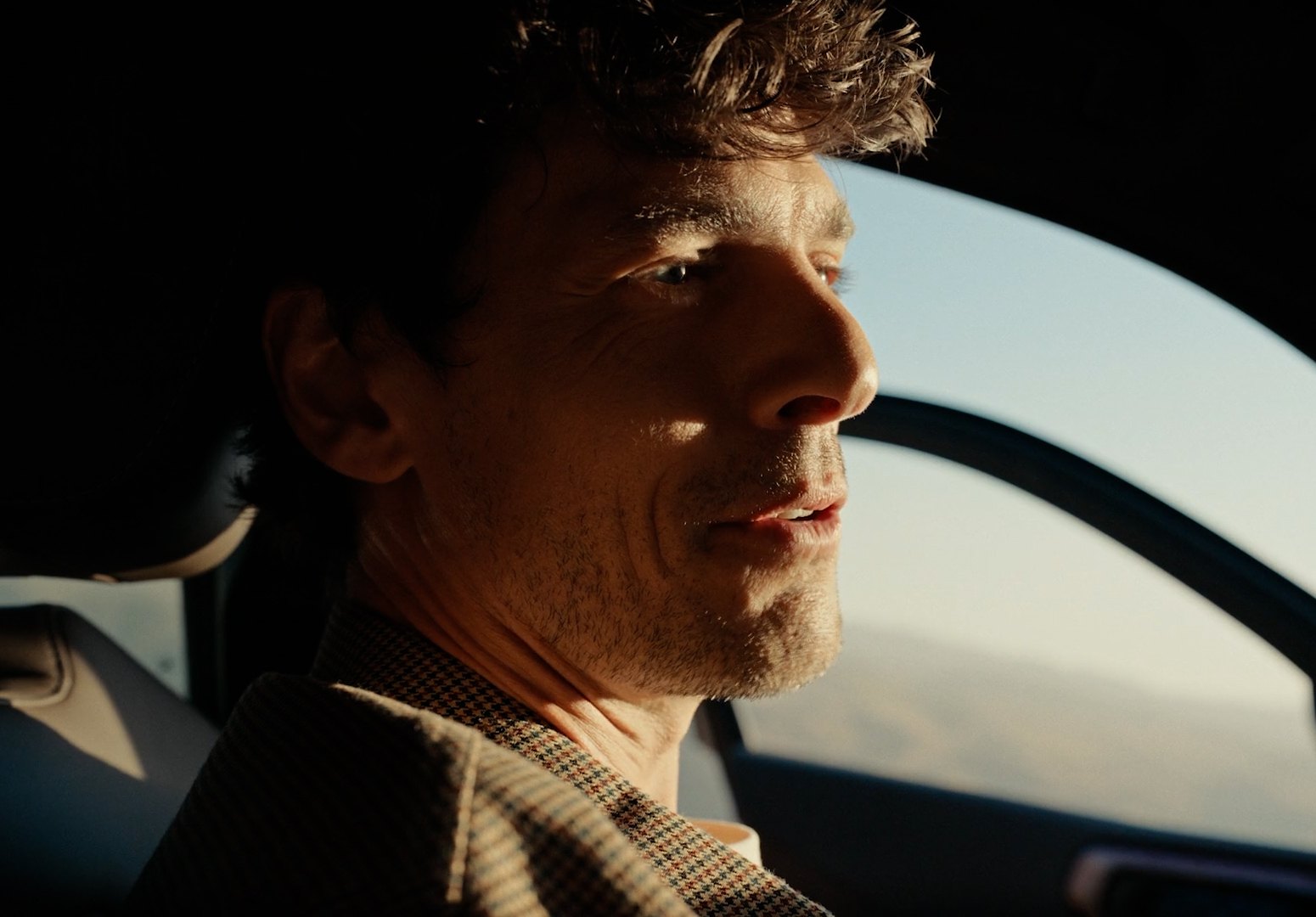
A man in a houndstooth jacket in a car, lit by low golden sun
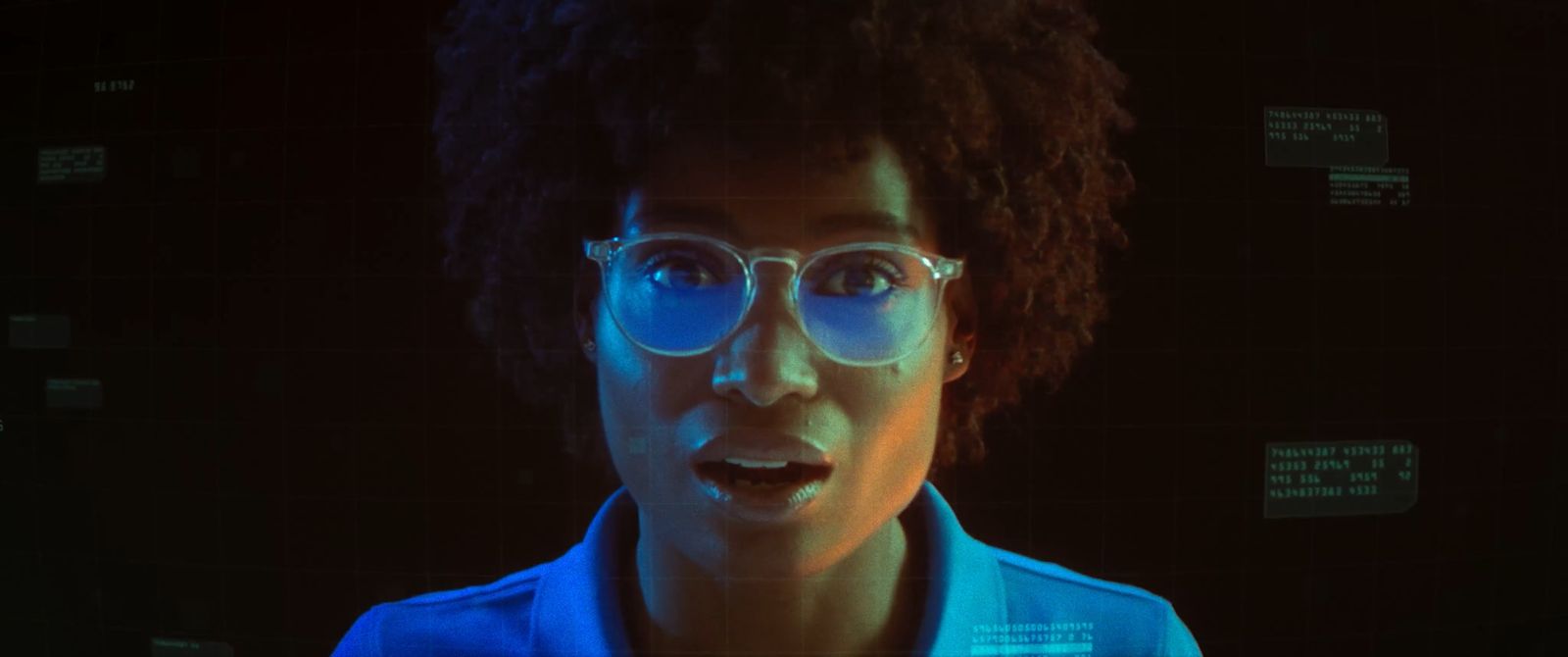
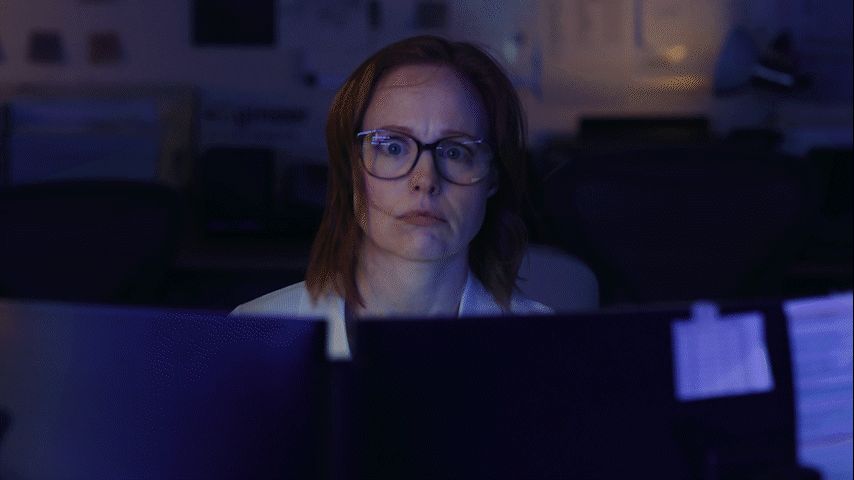
Claire in clear-framed glasses, her face lit blue by screens in the dark
The Rising Executive

Claire

Early 40s

She holds the budget and makes the final call, polished and capable. The audience sees themselves in her, and her shoulders drop first when KPMG’s world arrives.

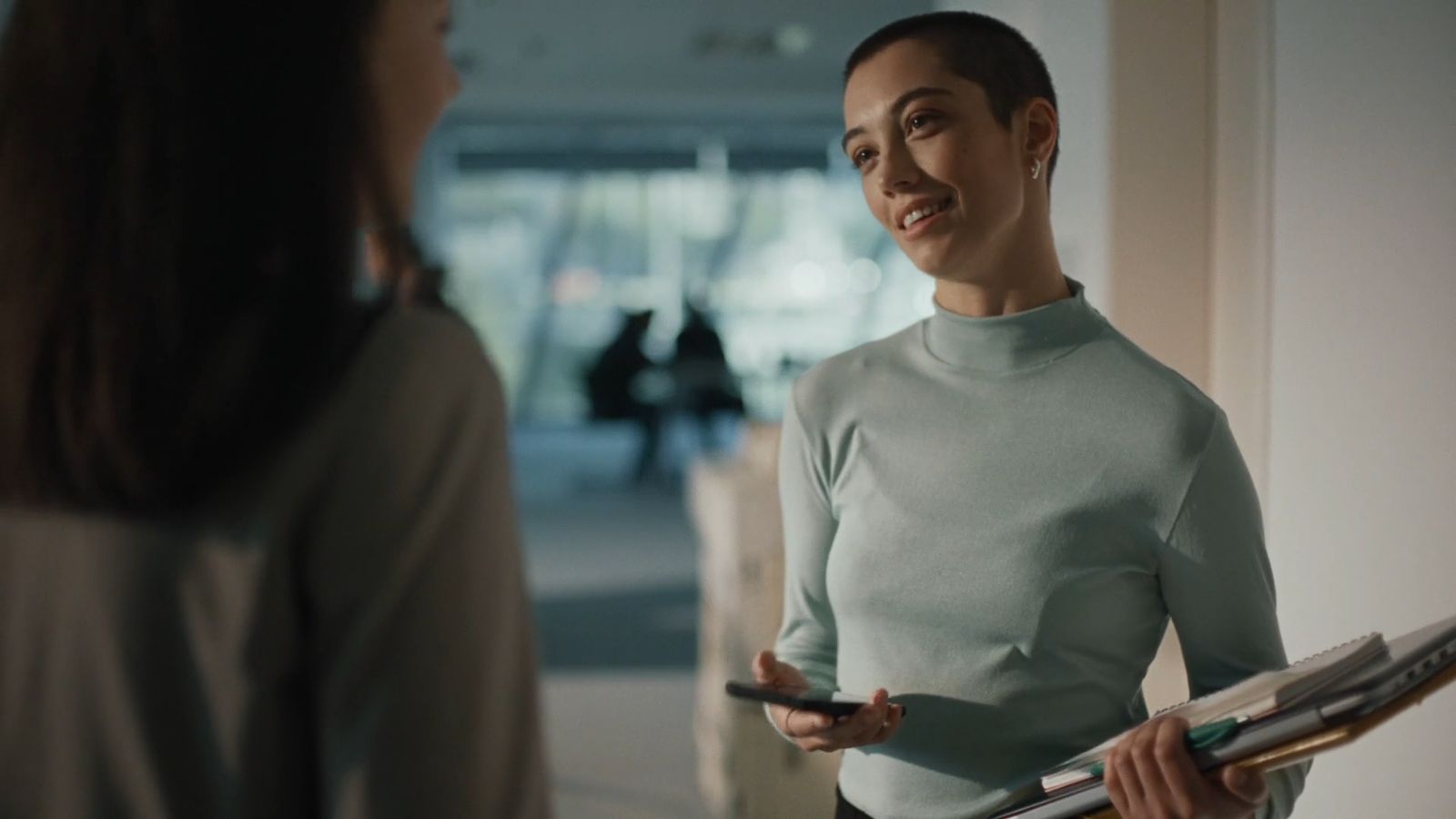
Maya, warm and mid-conversation, holding papers in a bright open office
The Operator

Maya

Mid-30s

She is the client-side lead who actually runs the project, and the person the audience wishes they had on their team. She is quick, warm and practical, the one who notices what’s slipping before anyone else does and steps in to fix it.

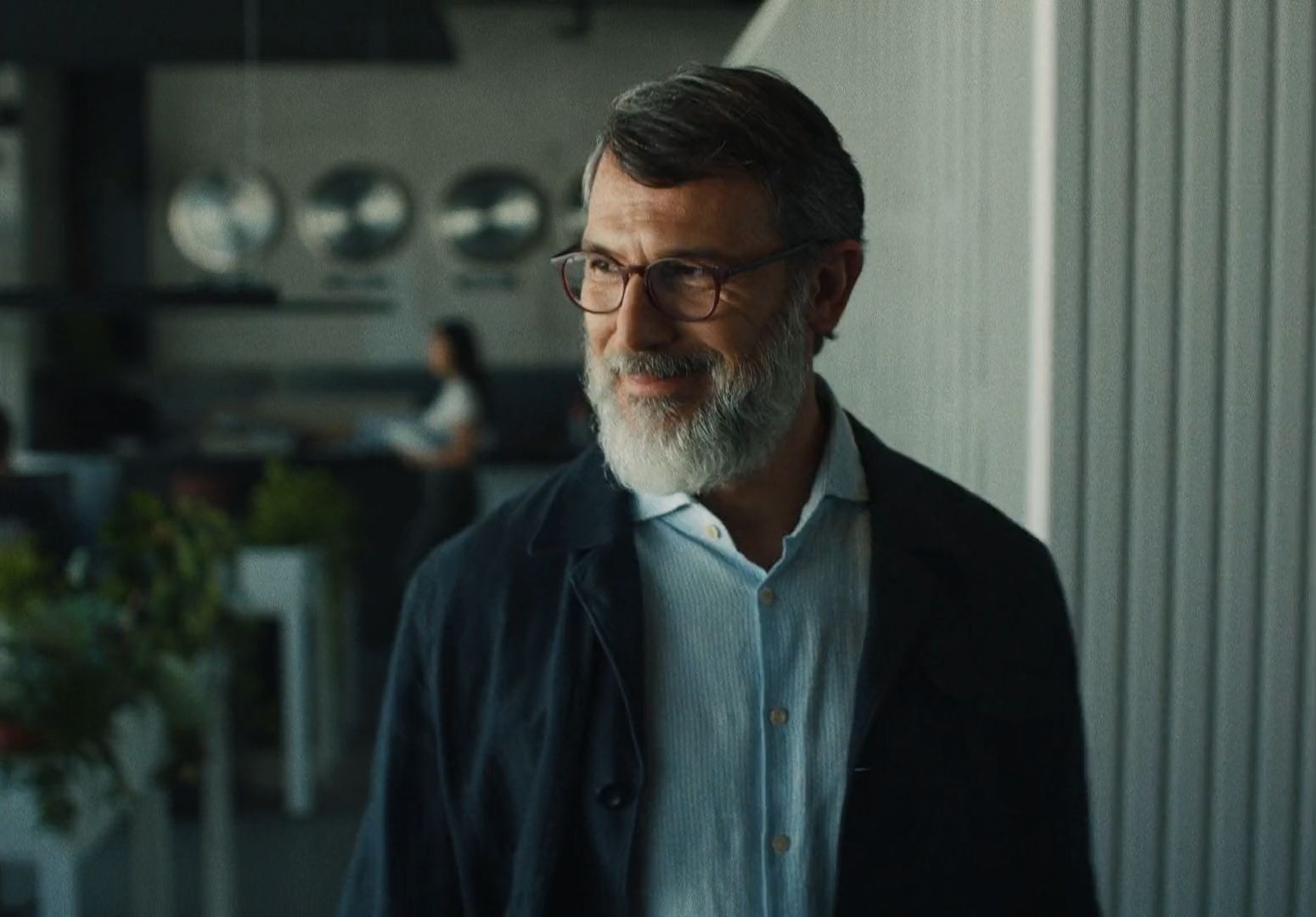
Andre, bearded and still, looking off-frame with a guarded expression
The Skeptic

Andre

Mid-40s

He has sat through every consulting promise and believes none of them, so winning him over is the film’s proof of credibility. He plays on stillness rather than dialogue, and his shift in Act III is small and unforced.

02

Performance

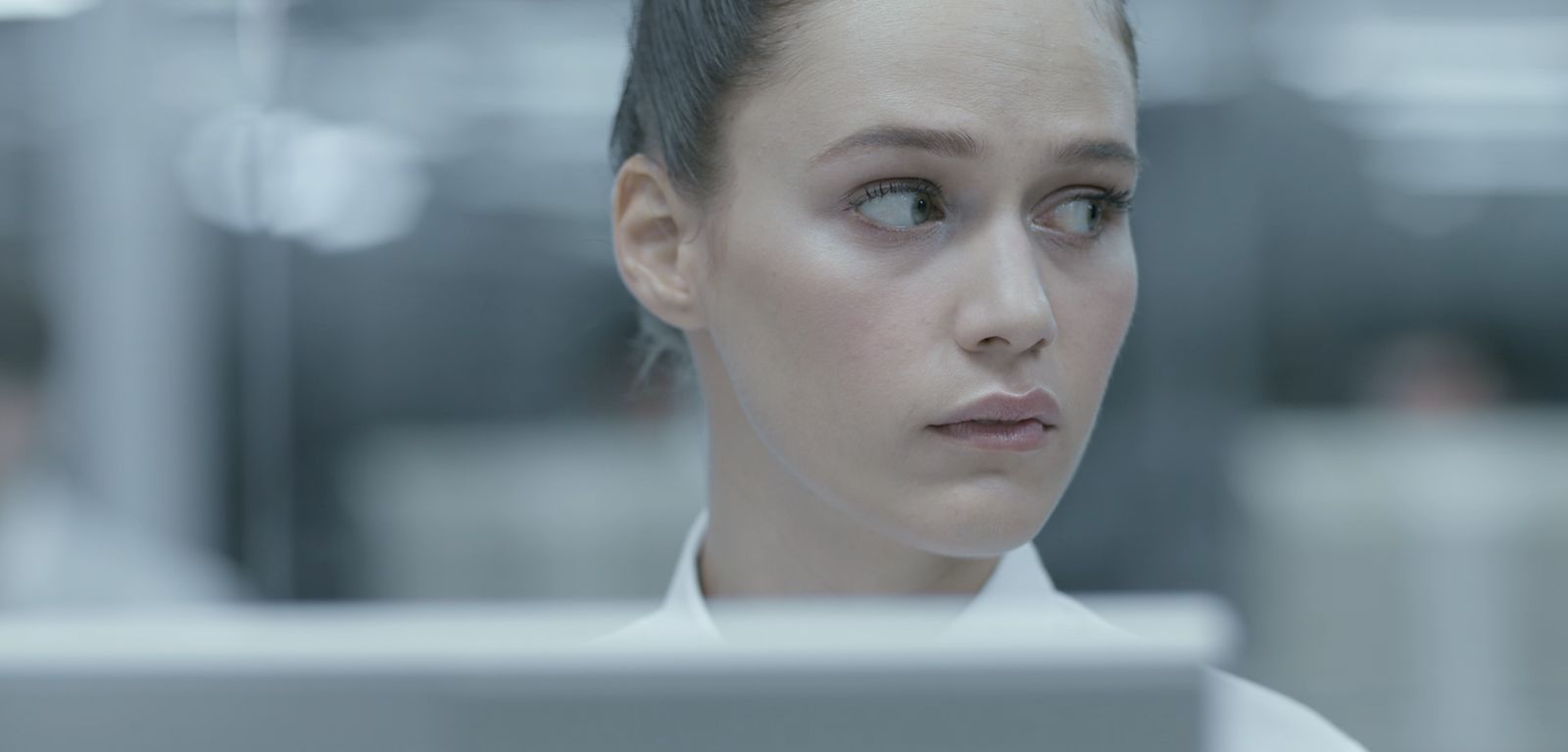
A woman in a bright, sterile room glancing sideways
Rows of identical men in grey suits at identical desks
Act I

Utopia of More

Main cast

They are relatable and open to the world, taking it in without reacting. Nothing has gone wrong yet. This sets the baseline, and the audience learns the world alongside them.

Supporting cast

They embrace the limitlessness of their tools and take on the traits of those tools: robotic, binary, rigid and uncompromising. They embody perfection, as the personification of a digital system in its utopian state.

A woman with glasses watching blue screens, worried
Act II

Overload

Main cast

They see their ability to keep up fading. They realize they will drown in infinite promise and the infinite work that comes with it, and the concern shows in their faces and actions. They don’t want more. They want balance, expert help and something to buffer the surplus. This is where their humanity shows: the stacking emails, the breaking production line, the hamster wheel with no exit. It’s the low point we need before the rescue.

Supporting cast

The fractures start to show. The robotic quality of the supporting cast becomes uncanny.

A woman smiling warmly, relaxed
Colleagues in warm light, leaning in to help
Act III

Business Better

Main cast

Balance. They are focused yet relaxed, in a world that is comfortable. Their bodies take up more space in larger furniture. They show warmth to the people around them, and it comes back. There is time for lightness with peers.

Supporting cast

This is the heroic moment, where KPMG resolves. These people are the opposite of Act I’s: warm, helpful, collaborative experts who take the burden off, streamline the endless inputs and make our characters’ lives manageable and pleasant.

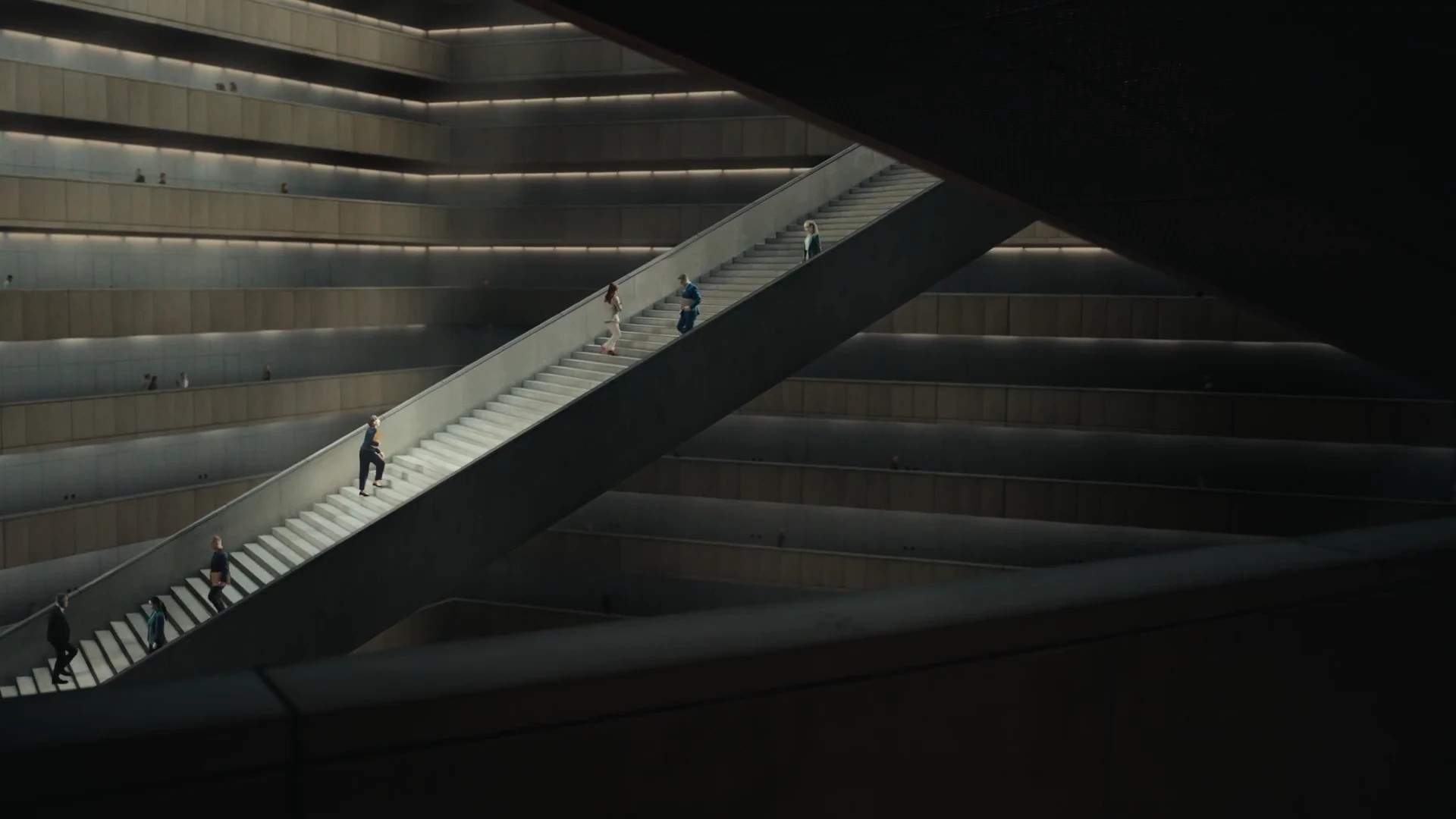
Office workers climbing a long diagonal staircase through a vast, many-storeyed hall lit by thin bands of light

03

Recurring Locations

The same places return in all three acts. The audience reads the change in the world, not a new set, which is also the most efficient way to shoot it.

The Coffee Shop

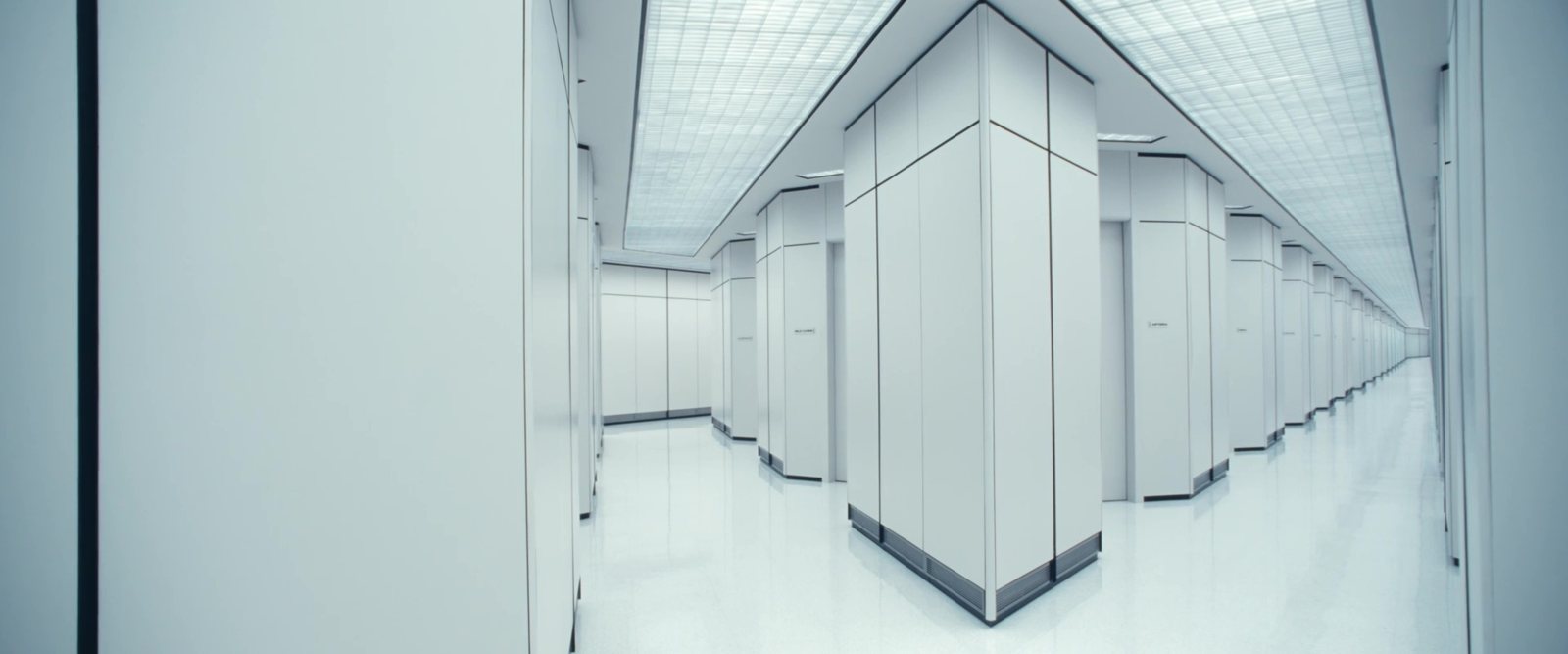
A long, spotless white corridor lit evenly from above, empty and uniformMore

A café run like a production line. The design is modern and sophisticated, the kind we admire today, pushed to sterility: steel counters, minimalist furniture, bright overhead light that is soft and equal, and a muted palette. The customers are coiffed and dressed in tailored blacks, whites, greys and muted tones. They stand equidistant in two perfectly straight single-file lines that end at two digital tills staffed by near-identical baristas. The camera is static and symmetrical, with strict rule-of-thirds framing.
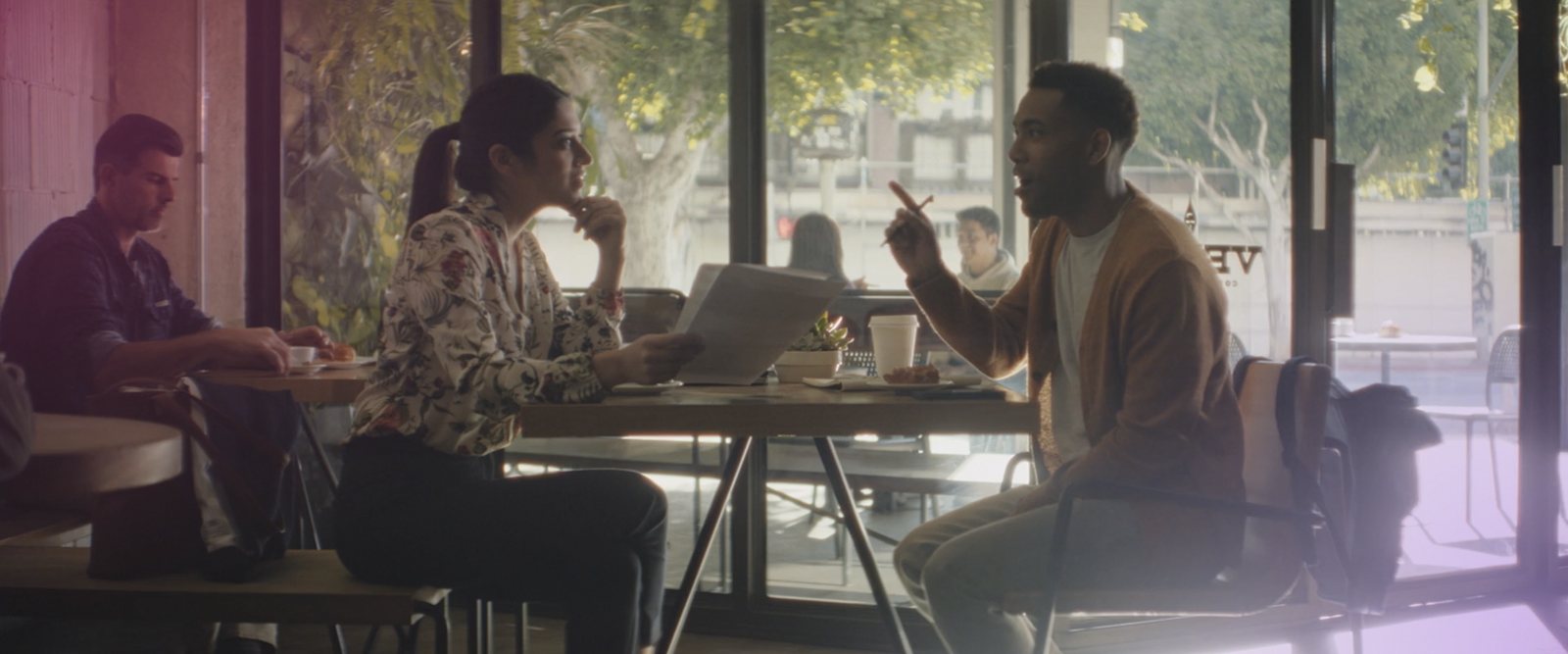
Friends talking at a table in a sunlit neighbourhood café, trees outside the windowBetter

The new neighborhood coffee shop has wooden beams, light-toned wood and pink calla lilies on small tables set close enough to share.
The Airport Lounge

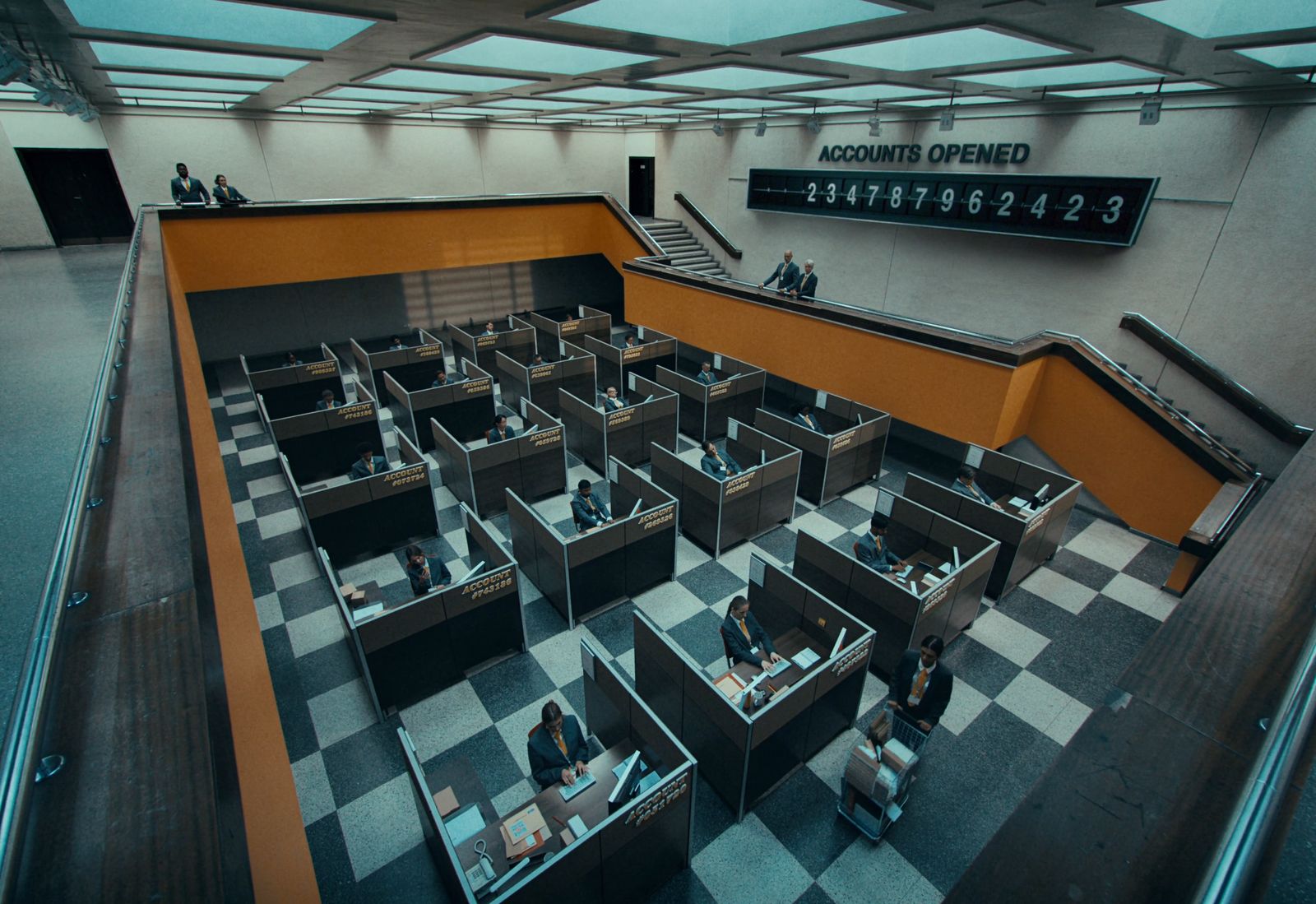
A vast lounge seen from above, rows of identical work podsMore

A vast orange-red carpeted space with high ceilings and tall glass windows onto the tarmac. Equally spaced pods hold passengers at their laptops, each flanked by two external displays that protrude from either side of the main screen.

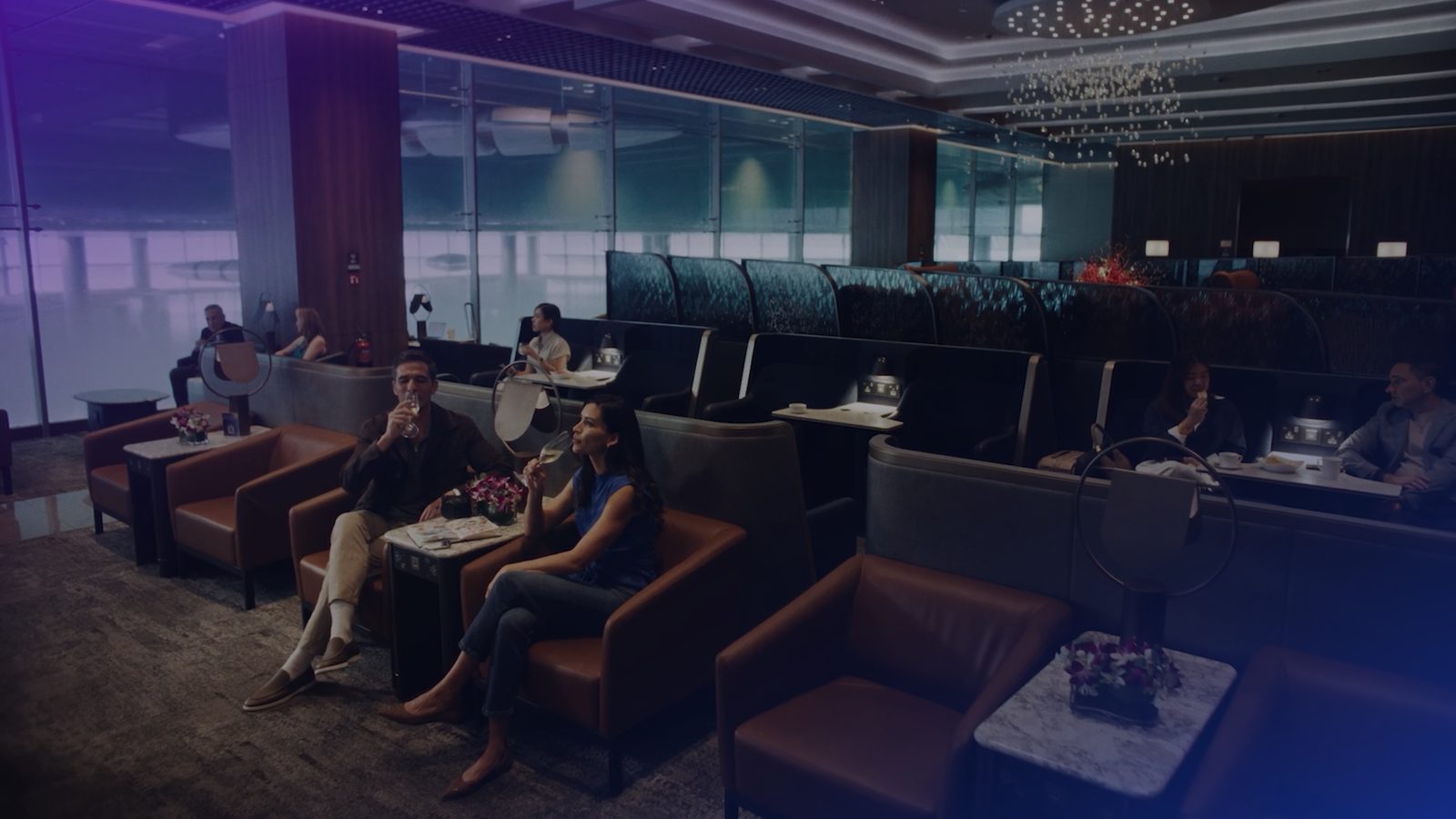
Travellers in loose clusters on leather sofas in warm lounge lightBetter

The lounge trades its rows of pods for generous sofas and armchairs in loose clusters, with low amber lamps and golden light through the tall windows.

The Boardroom

More

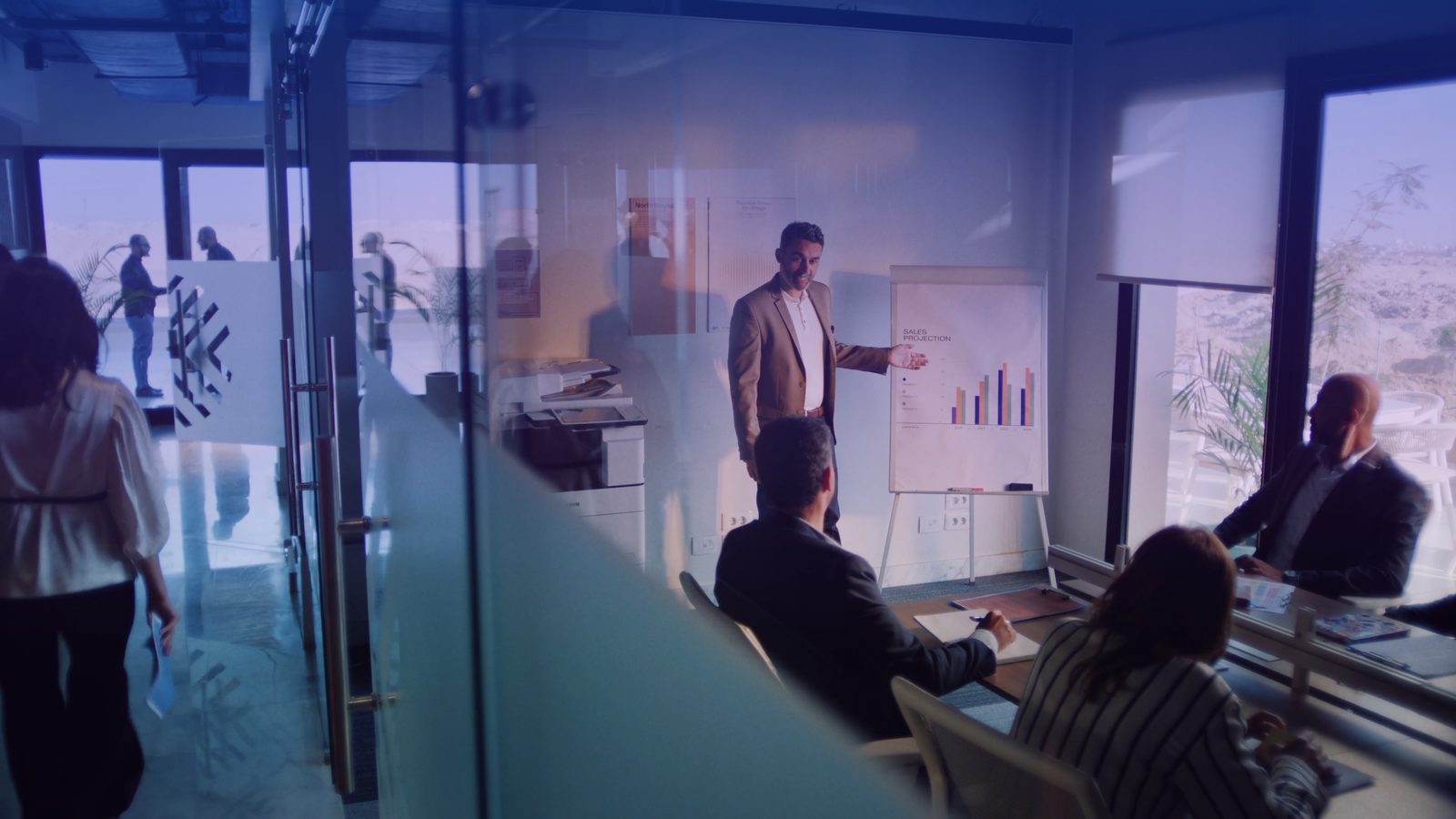
A boardroom staged like a product launch. A forty-foot aluminum table runs beneath a ceiling of panels that brighten for whoever speaks, in cool, even light. The doors part on their own. Every seat has a tablet and a digital place card showing name, role and meeting time. Holographic panels fill the space with satellite analysis, traffic patterns and machine data, drawn line by line. Everything is automated, synchronized and always a step ahead.

A glass-walled meeting room open to the cityBetter

The boardroom centres around a wood-topped table under soft, warm light, with deep navy chairs and glass walls open to the city.

New locations in the KPMG world

Business Better: Warmth and Room to Think

The types of places we return to feel lived, human in scale and lit like late afternoon. Nothing is rushed and every space feels made for the people in it.

Not recurring · a montage of new scenes

Business Better Montage: The World Beyond the Desk

Work now fits around life, in places with softness and air.

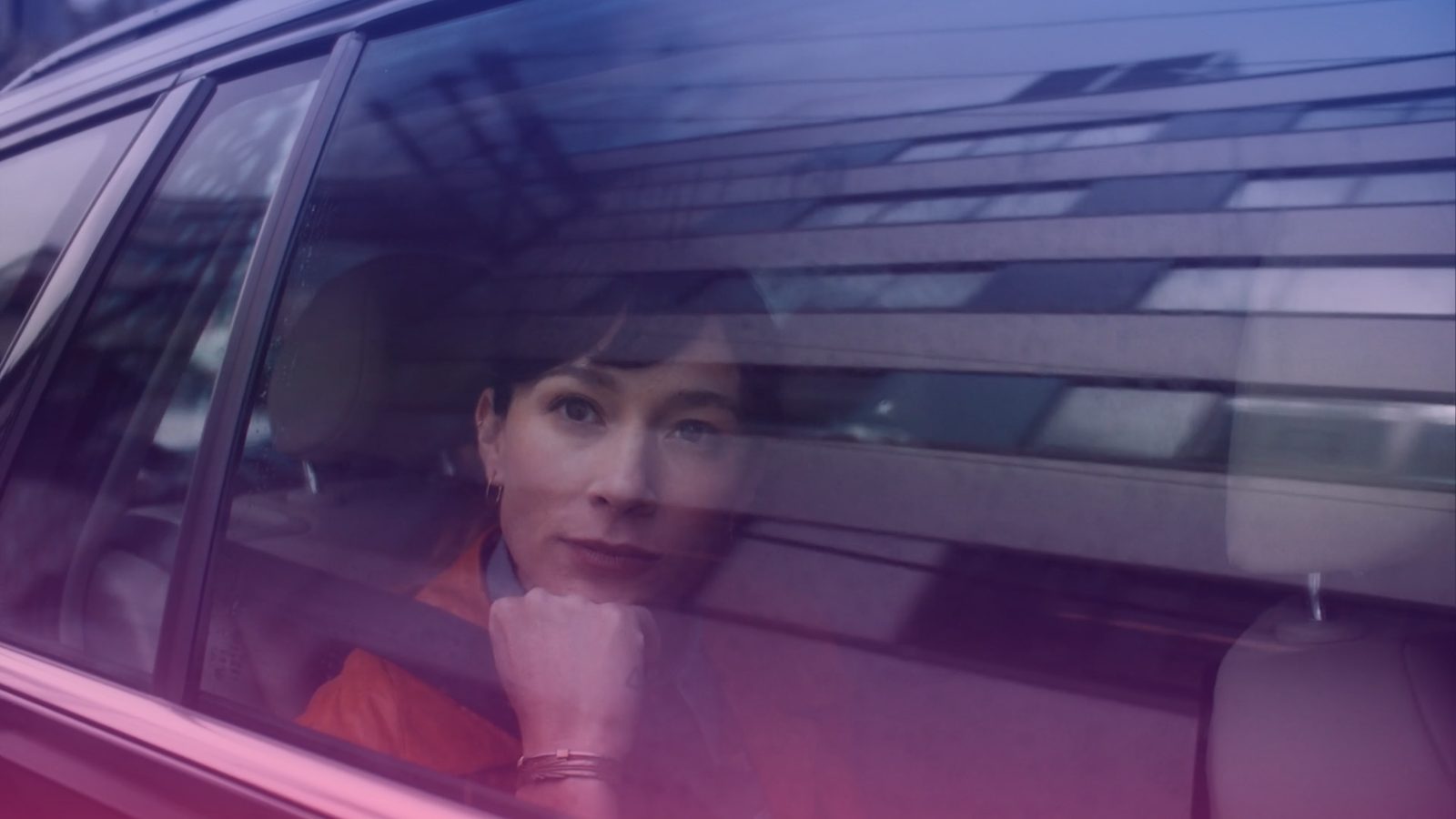
The back seat of a car at dusk, a woman's face against the window glass
The Back of a Black Car

At dusk, with a cracked window and a breeze. Dusky purple hues set across the cityscape.

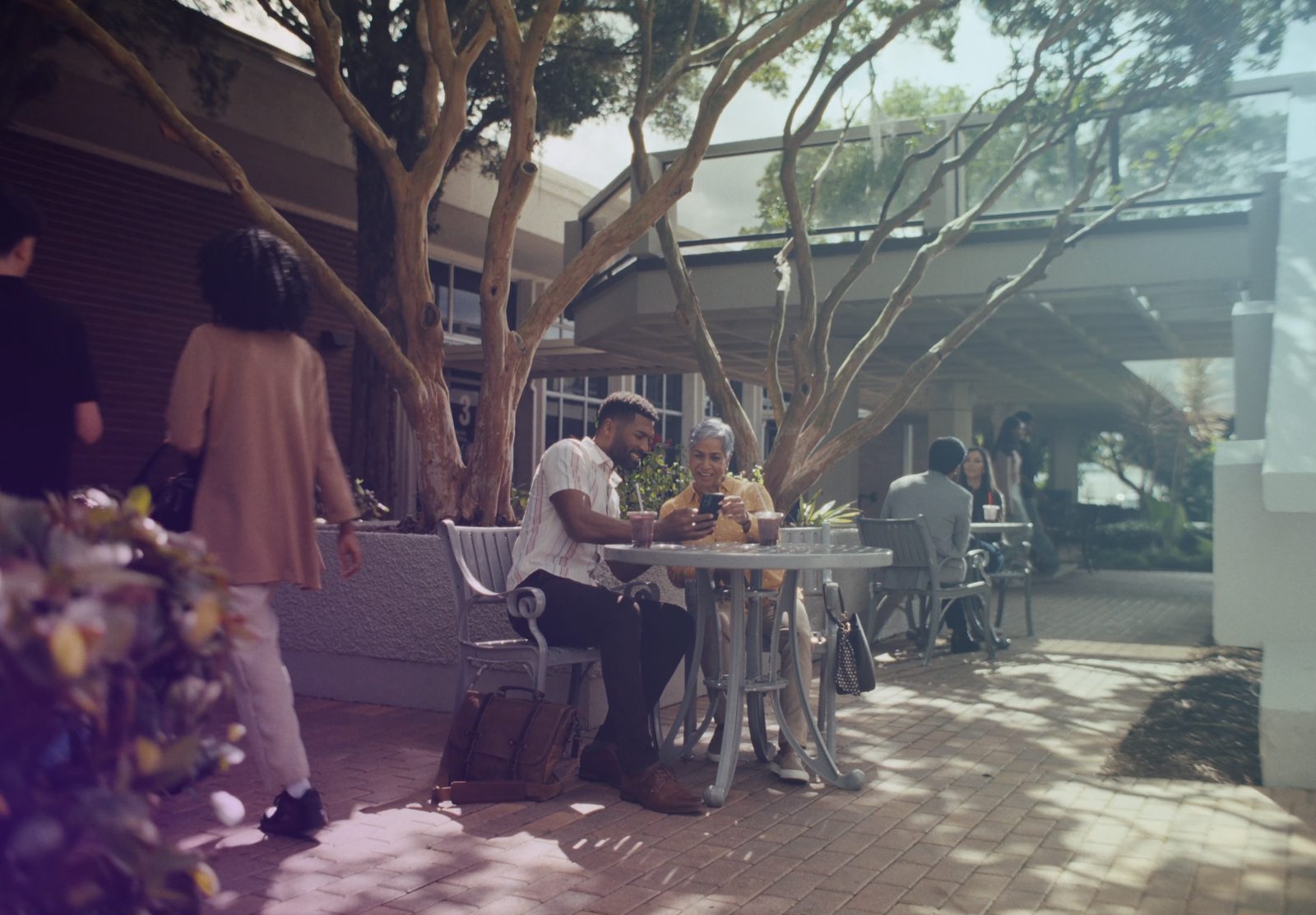
People at a table under a tree in a sunlit courtyard
An Outdoor Table

In a square or park, in soft, dappled light among purple and blue planters.

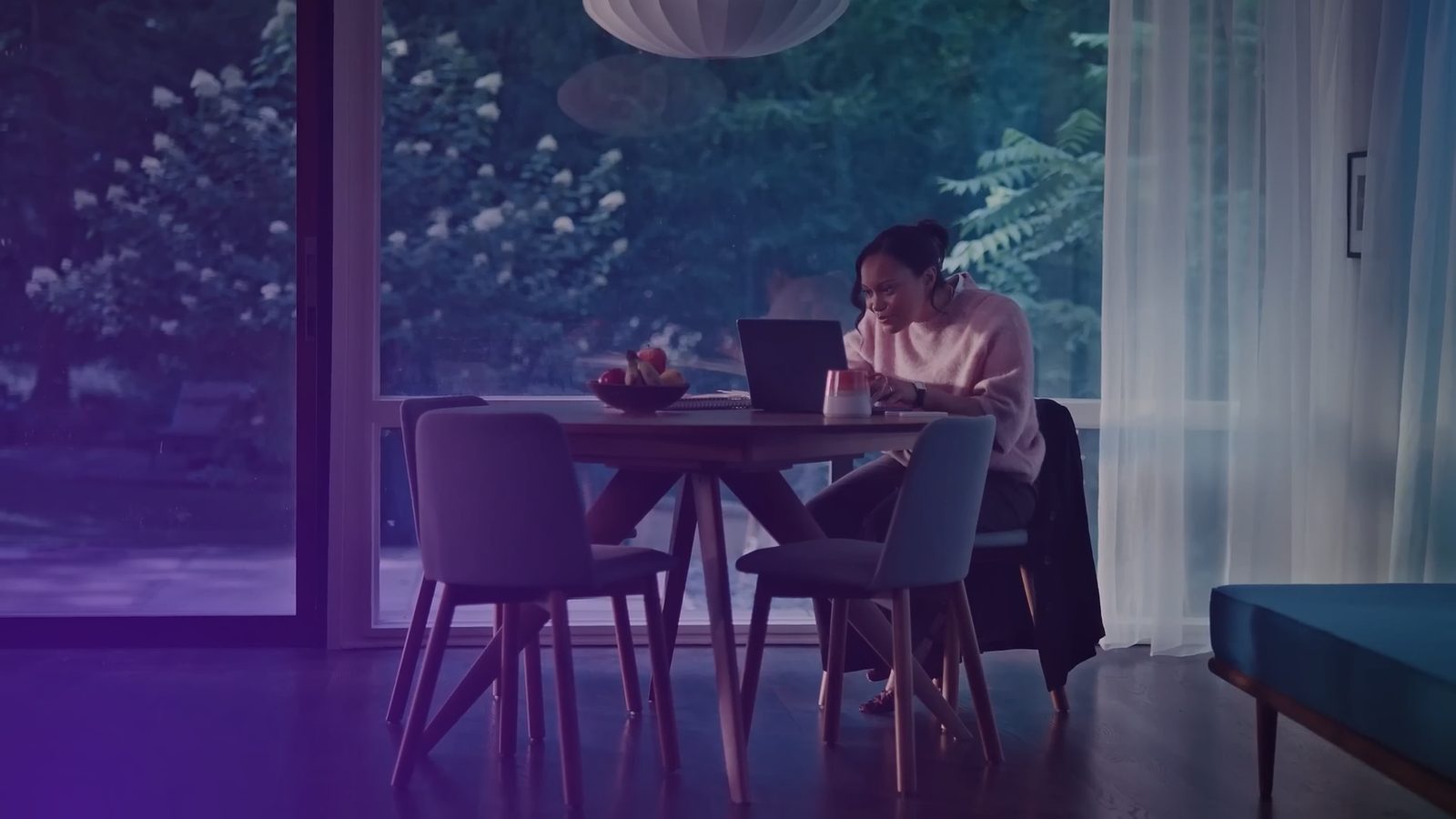
A woman working at a laptop in a warm home office filled with plants
A Home Office

Deep purple walls, a window onto a city or suburban street, and a family’s life close by in the next room.

04

Screens,
Tech & Data

The interface system, live.

The world of More lives or dies on its screens. They are where “more” becomes visible, and the feeling we’re after is too much information, too much data, both futuristic and uncanny.

I’m building the interface system now, in CSS, and it grows with every scene we write. The foundation is live: colour tokens, panels, readouts, gauges, data tables, and a boot sequence where outlines flash in, titles scramble, then data types itself out. It is written as plain code, so it can be used for real. When we shoot, it goes straight into post’s AI workflow: paste it in, and it generates picture-ready interfaces that match across every pod, till and boardroom wall. I’d love your input as we build it, so we can shape it together up to the shoot.

The Look
of More

The screens in Acts 1 and 2 belong to a dystopian future of business: cold, retro-futuristic, machine-made. Think early sci-fi command terminals, vector wireframes and holographic models floating over dotted grid floors. Thin linework, rigid geometry, clipped technical type.

The palette is the inverse of KPMG’s. Their blues, purples and pinks flip to amber, lime, sand and green, glowing on graphite. This is the opposite of the KPMG world, on purpose. When the brand gradient finally arrives in Act 3, it lands as relief.

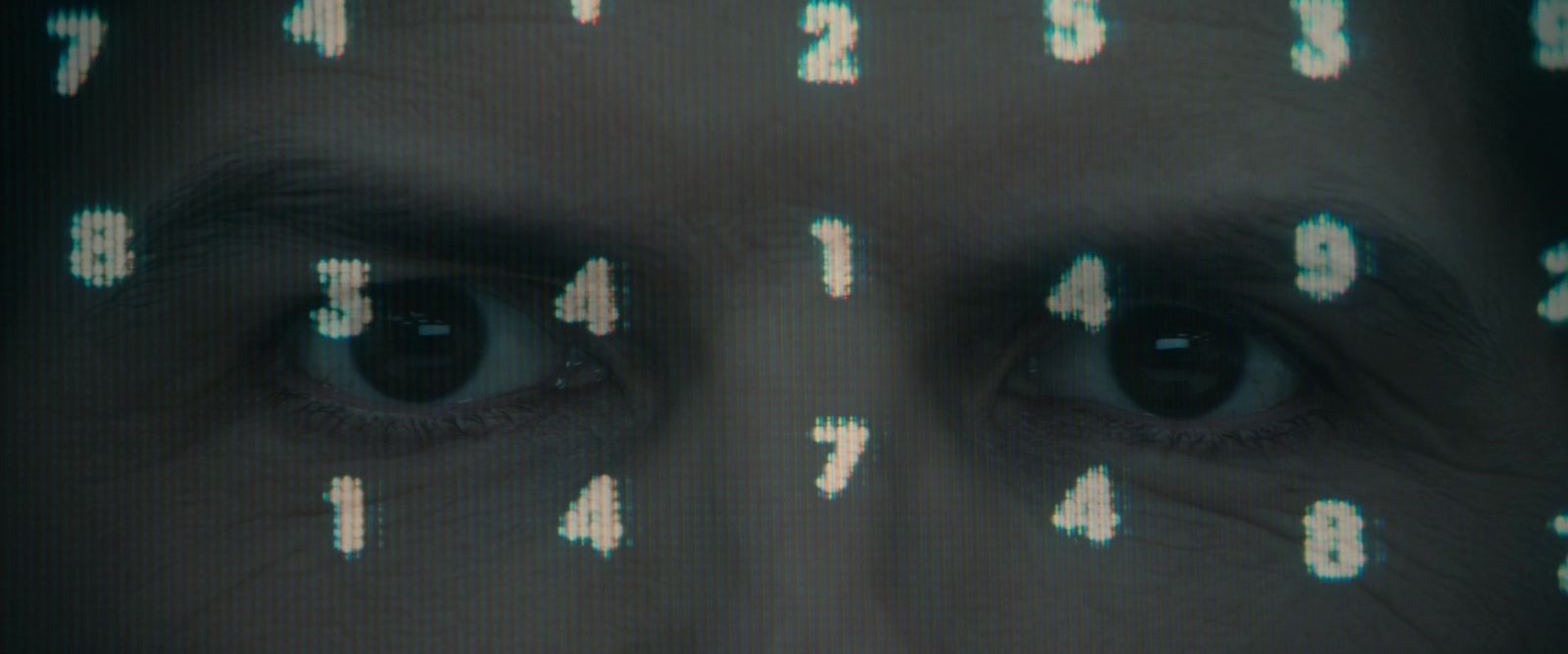
Digits reflected across a face and eyes
Grid of glowing blue numerals on black
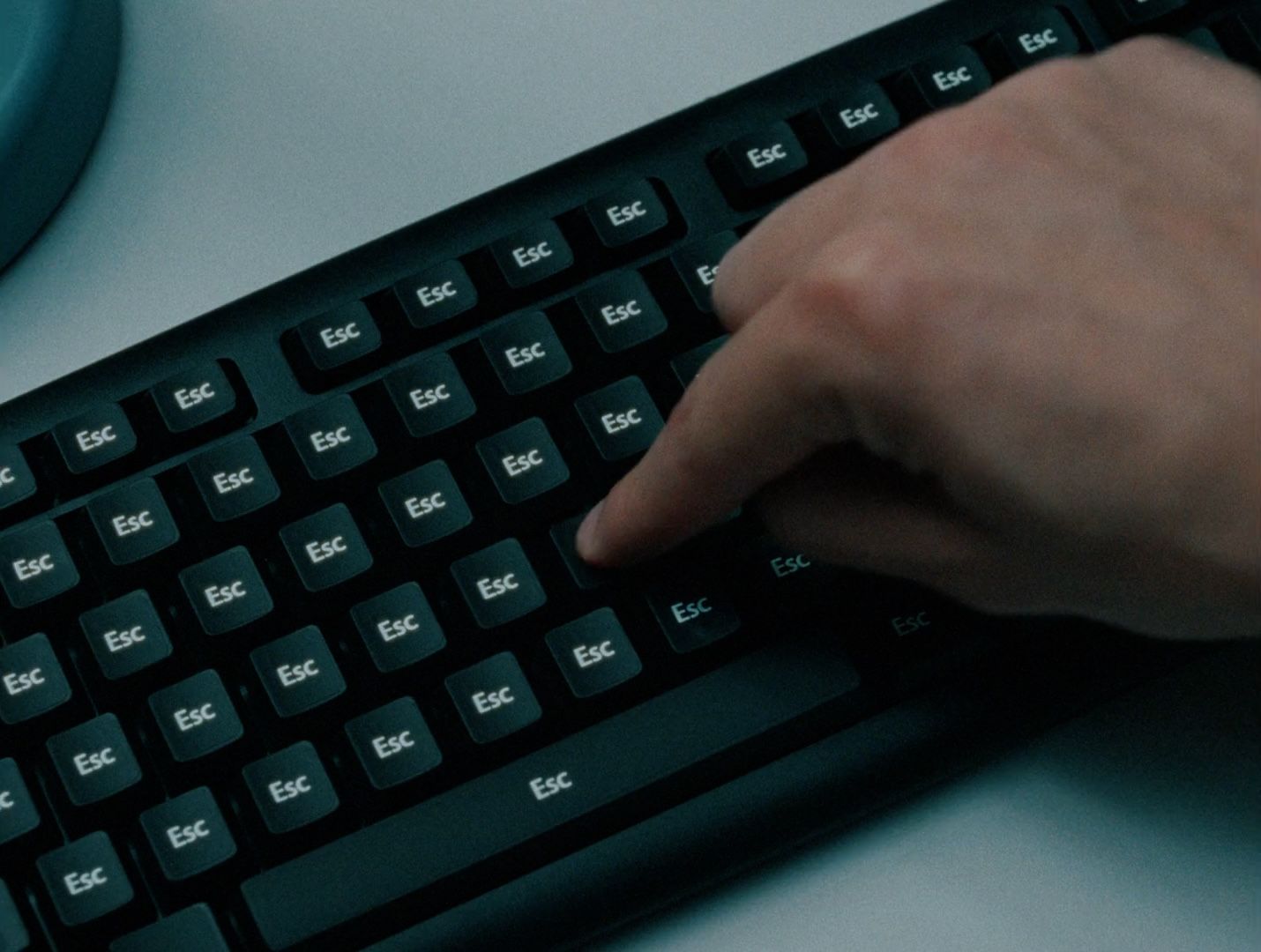
A finger pressing a black keyboard key, green-lit
Act 1

The Perfection of More

Immaculate, symmetrical and in sync across every screen. Beautiful, efficient and slightly inhuman. It’s what you think you want.

Act 2

Too Much

The same system with no one governing it. Panels multiply, layer and cover the people behind them. Amber alerts flood in and the sync begins to drift. Nothing new has been added. There is just more of it.